Welcome to RIDILUX LIGHTING
Architectural LED Lighting FAQ & Technical Support | RIDILUX
RIDILUX / TECHNICAL SUPPORT
Answers that move
projects forward.
Practical answers for specifying, installing and controlling architectural linear lighting.
01 / PRODUCT SELECTION & PERFORMANCE
Product & Performance
How do I choose between NeonLine, FlexWash and FlexGround?
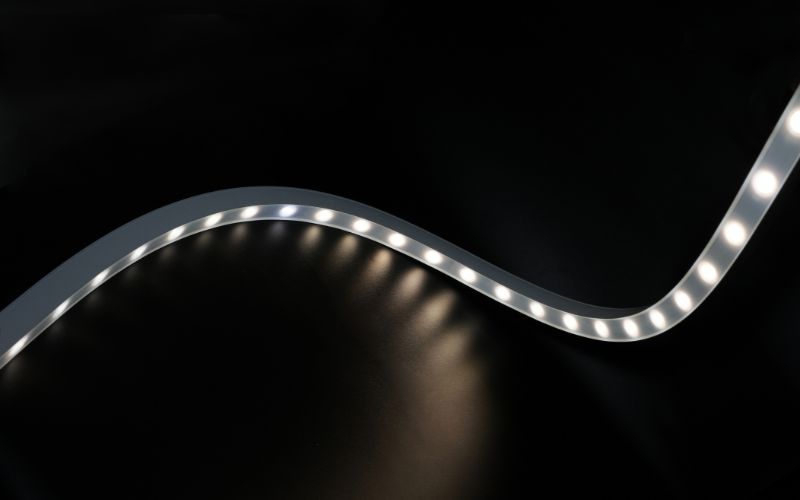
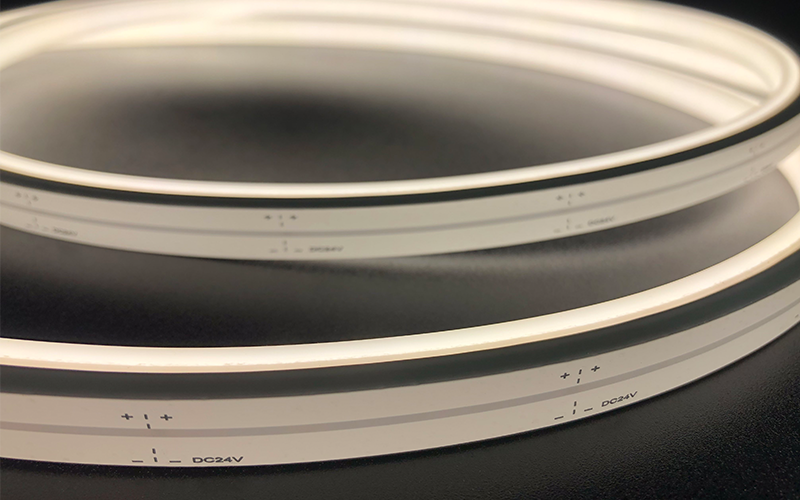
Choose NeonLine for a continuous, visible line of light; FlexWash when you need directional illumination across walls and curved facades; and FlexGround for recessed linear lighting integrated into paths or paving. The final choice depends on mounting detail, optical effect, load conditions and access for maintenance.
What is the difference between top bending and side bending?
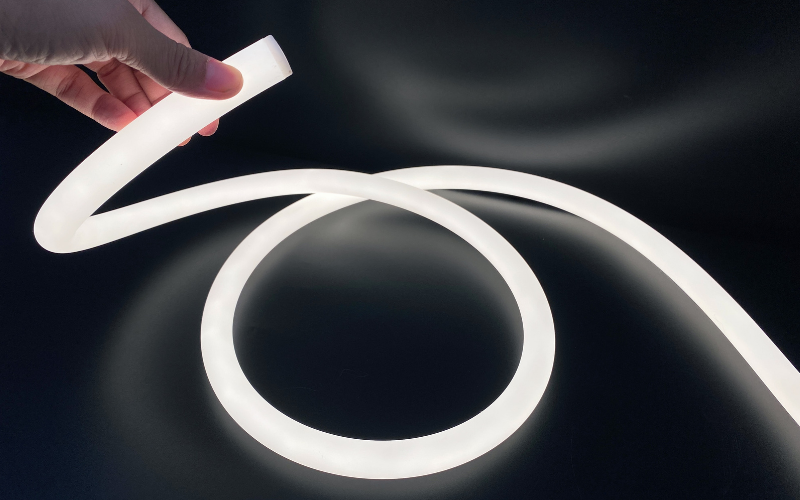
Bending direction describes the plane in which the profile can curve. Specify the intended light-emitting face and curve orientation before choosing a model. These are different product configurations; do not assume a single profile bends in both directions. Always follow the minimum bending dimension shown in the relevant datasheet.
How do I avoid brightness drop along a long linear installation?
Confirm the maximum run length for the exact voltage, wattage and color configuration. Voltage drop can be reduced with appropriate power-feed locations, cable sizing and segmented runs. Longer projects may require feeding from both ends or dividing the installation into separately powered sections.
Are IES/LDT photometric files and optical data available?
Photometric data may be available for selected products and optical configurations. Tell us the exact model, CCT, beam angle and wattage so our team can confirm the corresponding IES/LDT file rather than supply data for a different configuration.
What CRI and color consistency can I specify?
CRI, R9 and SDCM values depend on the LED source and individual product configuration. CRI 90 or tighter color-consistency options can be reviewed for applicable models. Specify your performance target and request the matching test information before approval.
02 / INSTALLATION & PROTECTION
Installation & Protection
Can RIDILUX IP68 NeonLine be used in swimming pools?
Yes, selected NeonLine-07 underwater configurations are specified for pool applications. The current datasheets state up to 5 m immersion for 1615 top bending and 1617 top/side bending, and up to 3 m for 1220 side bending, with chlorine concentration no higher than 5 ppm. Confirm the exact product, water chemistry, cable exits, sealing and electrical safety requirements before installation.
Does IP67 or IP68 automatically make a light suitable for every underwater installation?
No. IP ratings describe ingress protection under defined test conditions; they do not by themselves establish compatibility with continuous immersion, treated pool water, temperature cycling or installation details. Check the model-specific immersion rating, material compatibility and sealing of all connections.
Can Neon Flex be cut and sealed on site?
Cutting is permitted only where the selected model explicitly allows it and at its specified intervals. Waterproof performance depends on the approved end-cap, sealing process and workmanship. For critical underwater or difficult-to-service installations, request factory-finished lengths and confirm the installation method in advance.
Can FlexGround light modules be replaced after installation?
For FlexGround-03_2264, FlexGround-03_4075 and FlexGround-03_5065, the internal silicone LED module can be removed and replaced independently without breaking the embedded ground structure, provided the product is installed as specified. Do not assume this feature applies to FlexGround-03_3043 without model-specific confirmation.
Can FlexGround follow curved paths and withstand foot or vehicle traffic?
The four current FlexGround-03 profiles (2264, 4075, 5065 and 3043) are side-bending designs. Curvature limits, installation channel, load-bearing performance and impact rating must be checked for the exact model and mounting condition. Do not apply one load or bend rating to the entire series.
03 / CONTROLS & PROJECT SUPPORT
Controls & Project Support
What is the difference between DMX512 and SPI pixel control?
DMX512 is commonly used to address and manage lighting equipment in a wider control system. SPI is typically the data interface used by individually addressable LED pixels or modules. Some projects use a DMX/Art-Net-to-SPI controller; the correct architecture depends on pixel count, effects, wiring distances and controller compatibility.
Do you support dimming, tunable white, RGB and RGBW?
Selected RIDILUX products support different dimming and color configurations, including single color, tunable white, RGB and RGBW. Available control methods vary by product and LED configuration. Confirm the driver, control protocol and dimming compatibility before ordering.
Can I request custom lengths, cable exits or mounting accessories?
Yes. Depending on the product structure, we can review project-specific lengths, cable outlet direction, end caps, mounting profiles and accessories. Non-standard requests may require tooling, a minimum order quantity or extra validation, especially when waterproof sealing is involved.
What testing and warranty information can you provide?
Available documentation may include IP, IK, UV, salt-spray or other relevant test reports, depending on the model. Warranty terms also vary by series: the current NeonLine-07 underwater datasheets state a 3-year warranty. Request model-specific documents and written terms rather than applying one general claim across all products.
What should I send for a technical recommendation or quotation?
Send project drawings or photos, required lengths and quantities, mounting details, installation environment, CCT or color mode, power and control requirements, and the target delivery location. For underwater or ground-recessed applications, also include water conditions or expected loading so the proposed solution can be checked properly.
PROJECT SUPPORT
Need an answer for your project?
Send us your drawings, specifications or installation requirements.
Specifications, application limits and warranties must be confirmed against the selected model and its current documentation.